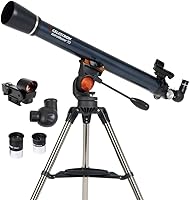
Start Here
Can You See Planets With a Telescope?
Yes, a telescope shows planets as more than dots. Learn which planets you can see, what a beginner scope shows and what to expect at the eyepiece.
Plain guides for a first real telescope: how to choose, how to use it, what you can see and what it costs.
Yes, a telescope shows planets as more than dots. Learn which planets you can see, what a beginner scope shows and what to expect at the eyepiece.

How much does a good telescope cost? Compare budget, mid-range and premium tiers, what each buys and the hidden costs that catch first-time buyers.

How to choose a telescope for beginners, step by step. Compare aperture, mount type, app help and setup effort, then pick a scope you'll use on clear nights.
How to find planets with a telescope, step by step. Check a sky map, aim with a finder, then center the planet in a low-power eyepiece on a steady night.

How to use a telescope on your first night: set it up on firm ground, aim with the finder, focus on the Moon, then step up the power slowly.
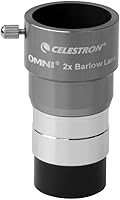
What a telescope Barlow lens does, when it helps and when it doesn't. Compare 2x and 3x Barlow lenses that fit the 1.25 inch eyepieces most beginner scopes use.
A plain guide to your first real telescope for adults: the main types, the sizes that work, which picks fit each buyer and where to read next.
What can you see with a telescope? The Moon, planets, double stars and clusters show well, while galaxies look faint. Here is what to expect.

What size telescope is best for viewing planets? A 100 mm to 150 mm aperture shows the most planet detail, and a steady mount keeps Jupiter and Saturn in view.

Many beginner telescopes can see Saturn's rings. Learn the scope size that shows them best, what the rings look like and what to expect on a first night.