Can You See Planets With a Telescope?
Yes, a telescope can show you planets, and Jupiter and Saturn are the easiest to see. Venus shows phases, and Mars looks like a small reddish disk when it's close to Earth.
On this page (8 sections)
- Which planets can you see with a telescope?
- What will a planet look like through the eyepiece?
- How do you find a planet in the sky?
- Which telescope shows planets best for a beginner?
- Can you see planets from a city?
- Tips for your first planet night
- Never point a telescope at the sun
- Pick a telescope and a clear night to see planets
Yes, a telescope can show you planets. Jupiter and Saturn are the easiest to see, and a small scope turns them from bright dots into real disks with detail.
You won't see the color photos from a space probe. You'll see small, sharp shapes in tan, white and gray, and the view depends on the planet, your scope and the air that night.
Which planets can you see with a telescope?
Jupiter and Saturn are the two most rewarding planets for a first scope. Jupiter appears as a bright disk with faint cloud bands on steady nights, and its four largest moons show as tiny points beside it.
Saturn is the planet most people buy a telescope to see. Its rings look like a thin, pale oval around a small yellowish disk, and our Saturn guide covers the details.
Venus shows phases, the way the Moon does. It's very bright, so you can spot it near dusk or dawn, and it looks like a small crescent or half-lit disk in the eyepiece.
Mars looks like a small reddish-orange disk. Its surface detail shows mainly when it's close to Earth, which happens about every two years.
Mercury stays close to the sun in the sky, so it's hard to catch in twilight. Only search for it after the sun has fully set.
Uranus and Neptune look like faint blue-green dots, and you need a chart to find them.
What will a planet look like through the eyepiece?
Planets look smaller and softer than the photos you've seen. Expect pale tones and a sharp edge, and let your eyes adjust for a few minutes before you judge the view.
Steady air matters more than magnification. On a calm night the image holds still, and on a windy night it shimmers, which blurs the detail.
Moderate power often shows more than maximum power. Too much magnification makes the planet dim and soft, so start with a middle eyepiece and move up only if the image stays steady.
How do you find a planet in the sky?
Planets usually shine with a steady light, while most stars twinkle. A sky app or chart tells you where each planet sits tonight, so you can point the scope without guessing.
Which planets you can see with a telescope tonight
Pick the planet in the app first, then look for it with the naked eye before you use the telescope. The naked eye finds the general spot, and the finder scope gets you on target.
Keep the scope on a sturdy table or tripod. A shaky base moves the image even when you've found the planet.
Which telescope shows planets best for a beginner?
Any telescope in this guide can show Jupiter, Saturn and the Moon. A larger lens or mirror shows more detail on the planets and their moons, so the choice depends on how much light you want.
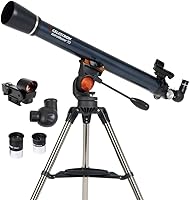
A 70 mm refractor on a simple mount is a good first step for the Moon and bright planets. The AstroMaster 70AZ has a long focal length built for Moon and planet views.
An 80 mm kit with a phone adapter is another easy start. It's a sensible pick if you want the Moon and brighter planets without a lot of setup.
A 130 mm tabletop Dobsonian gathers more light. That helps Jupiter's bands and Saturn's rings look brighter on a calm night, and the base keeps the setup simple.
If you want help finding planets, the app-guided models do that work for you. The StarSense app shows planets in its tonight list and points you to them.
Can you see planets from a city?
Yes, the bright planets still show from a city, because light pollution hides faint targets first. Jupiter and Saturn stay bright enough to see from most backyards with a clear view of the sky.
A darker site helps with fainter planets and with galaxies. If you want more than the planets, plan a trip to a site with less light from the streetlights.
Tips for your first planet night
Pick a night when the planet is high in the sky. A planet low near the horizon looks dim and wobbly, since you're looking through more air.
Give your eyes time to adjust, and avoid bright phone screens while you look. A dim red light keeps your night vision for the eyepiece.
Keep the list short. Jupiter, Saturn and the Moon make a full first night, and you can add Venus or Mars once you know the focus and the finder.
A notebook helps too. Note the date, the planet and what you saw, and you'll notice the changes from night to night.
Never point a telescope at the sun
Never point a telescope, or its finder, at the sun. The sun can cause permanent eye damage in an instant, and this guide does not cover solar viewing.
Venus and Mercury sit near the sun in the sky, so only search for them when the sun is well below the horizon.
Pick a telescope and a clear night to see planets
Yes, you can see planets with a telescope on most clear nights. Start with Jupiter and Saturn, use a sky app to find them, and keep the magnification moderate.
For a wider view of what you can look at, read what you can see with a telescope. To find planets on your own, follow how to find planets with a telescope.
If you're choosing a scope for planets, our best telescopes for viewing planets guide compares the picks. NASA's science site has up-to-date facts on each planet.
Frequently asked questions
Can you see planets with a small telescope?
Yes, a 70 mm or 80 mm refractor shows Jupiter and Saturn, the phases of Venus, and Mars as a small disk when it's close to Earth. Expect small, steady images that need a calm night.
Can you see Jupiter's moons with a telescope?
Yes, Jupiter's four largest moons show as small points beside the planet in most beginner scopes. Their spacing changes each night, so check a sky app or chart before you look.
Can you see planets from a city?
Yes, the bright planets show even under city light, since they are much brighter than most stars. Faint planets and deep-sky targets need a darker site, so plan a trip if you want more than the planets.