How to Find Planets With a Telescope
Here's how to find a planet with a telescope: check a sky map for where it is, aim the scope with its finder, then center the planet in a low-power eyepiece. Jupiter and Saturn are the easiest planets to locate for a first-timer.
On this page (7 sections)
To find a planet with a telescope, check a sky map to see where the planet is, aim the scope with its finder, then center the planet in a low-power eyepiece. Planets are bright, so once you know where to look, they're one of the easiest targets for a first telescope.
Planets move against the background stars over days and weeks, so you can't rely on last month's position. Check a sky map each time you go out, and you'll find the planet faster.
This guide takes you through each step, then covers the most common reasons a planet is hard to find. If you're still choosing a scope, read best telescopes for viewing planets for picks that suit planet viewing.
How to find a planet with a telescope, step by step
The method is the same for any planet. Look up its position, aim the scope roughly, then fine-tune the view in the eyepiece.
Step 1: Check where the planet is
Use a free sky map app or a printed star chart to see which planets are up and where they sit. Note the direction, such as east or west, and how high the planet sits above the horizon.
A sky map also tells you when a planet rises or sets, so you can plan your session around its best position.
Step 2: Find the planet with the finder
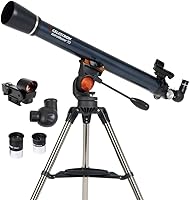
Start by pointing the telescope in the planet's general direction. Then look through the finder, a small red dot or a small scope on the side of the tube, and move the tube until the planet sits in the dot or the crosshair.
A red dot finder projects a small dot that marks the aim point. You don't need to look through a small eyepiece, so the search is quicker for most first-timers.
Step 3: Center it in the eyepiece
Put in your lowest-power eyepiece first, since it gives the widest view and makes the planet easy to catch. Once the planet is in the eyepiece, center it, then move up in power only if the view is steady.
If the planet drifts out of the eyepiece, the mount needs a small nudge. Slow-motion knobs or a gentle push on the tube brings it back.
Which planets are easiest to find
Jupiter and Saturn are the usual first targets for a new telescope owner. Both are bright, both look distinct from the stars, and both show something worth seeing even in a small scope.
For a wider look at what a first scope shows, read can you see planets with a telescope.
Venus is very bright and easy to spot low in the sky. Mars is harder to tell apart from a star unless it's close to Earth, which happens only at certain times.
Why Jupiter and Saturn stand out
Jupiter is the brightest planet most nights, and its cloud bands show when the air is steady. Its four bright moons sit close by, and they make a good test of your focus.
Saturn is less bright than Jupiter, but its rings make it one of the most striking sights for a first-timer. Most small telescopes show the rings as a clear oval.
Venus and Mars
Venus is very bright, so it's often easy to find even when the sky is hazy. Through a small scope, it looks like a bright disc with a phase, rather than a sharp point.
Mars can look small and ordinary through most scopes. Its surface detail shows best when it's close to Earth and the air is steady.
If you want to know which size of scope shows these planets best, read what is the best size telescope for viewing planets.
What to use to aim your telescope
Most beginner scopes come with a finder of some kind. A StarPointer or red dot finder is the most common, and an app-guided scope adds a phone that does the pointing for you.
The three options below cover the main ways to aim. Choose one based on whether you want a phone to help or a simple dot to follow.
If the budget is firm, the best telescopes under 300 dollars roundup lists scopes that come with finders and eyepieces in the box.
Common problems when you're looking for a planet
Most misses come from a wrong aim, a finder that's out of line or too much power. Each one is easy to fix once you know to check.
The planet is in the finder but not the eyepiece
The finder and the telescope are out of line. Center a bright star in the eyepiece first, then adjust the finder until the same star sits in its dot or crosshair.
The planet looks blurry or wobbly
The air is probably the problem, since a shimmering sky smears every planet. Drop to a lower-power eyepiece, and wait a few minutes for the air to settle before you judge the view.
Reflectors also need time to reach the outside temperature. Give the tube a few minutes outside before you look, so the image sharpens.
The planet keeps drifting out of view
Planets move across the eyepiece as the sky turns, especially at higher power. Use a lower-power eyepiece or a mount with slow-motion knobs, and nudge the scope back to the planet every so often.
Stay away from the sun while you search
Never point a telescope or its finder at the sun, even for a moment. Looking at the sun through an unfiltered telescope can cause permanent eye damage.
Venus and Mercury sit close to the sun in the sky, so only search for them after the sun has fully set.
Tips for a first planet night
A few simple habits make planet nights more rewarding. They help you find planets faster, and they keep the view steady.
- Check the sky map before you go out, and note the planet's direction and height.
- Set up the scope and let it cool before you look.
- Start at the lowest power, then step up only when the view is steady.
- Keep a red light handy, so you can read your sky map without losing your night vision.
How to find planets with a telescope on your first night
The steps are simple: check the sky map, aim with the finder, and center the planet at low power. Practice on Jupiter or Saturn first, since they're easy to recognize and give a clear reward.
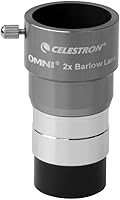
Once you can find a planet on your own, step up to more power with a Barlow lens. Our telescope Barlow lens guide explains when that helps.
Frequently asked questions
Why does a planet look like a star in my finder?
At a glance, a planet and a star both look like a point of light, so the finder can be confusing. Planets usually shine with a steady light, while stars twinkle more, and a sky map shows which bright point is the planet.
Why can't I see the planet in the eyepiece after I find it in the finder?
The finder and the telescope are probably out of line. Center a bright star in the eyepiece first, then adjust the finder until that star sits in its dot or crosshair, and the planet should land in the eyepiece once they match.
Do I need an app to find planets?
You don't need an app, since a free sky map app or a printed star chart works well for finding planets. An app-guided scope like the LT 114AZ does the pointing for you, but a sky map still helps you learn the sky.