What Is the Best Size Telescope for Viewing Planets?
The best size telescope for viewing planets has 100 mm to 150 mm of aperture, which shows the most planet detail. A 70 mm scope can still show Jupiter and Saturn, but the bigger scopes show more of their surface detail and bands.
On this page (10 sections)
- What size telescope is best for viewing planets?
- Why aperture beats magnification
- Why 114 mm to 130 mm is a good middle size
- When a 150 mm scope makes sense
- Mount choices for planet viewing
- What else matters for planets
- Honest expectations for planet views
- How to pick a size you'll actually use
- Safety when you're observing planets
- What size telescope do you need for viewing planets?
The best size telescope for viewing planets is a 114 mm to 150 mm scope. What matters most is a mirror you can set up and hold steady, because one that's too big or too wobbly won't show you much on a planet night.
The right size also depends on how easily you can use the scope. A bigger mirror is only useful if you can set it up, aim it and keep the planet in view.
This guide explains why aperture matters for planets, what each size shows, and how the mount changes the experience. For picks by size, read the best telescopes for viewing planets.
What size telescope is best for viewing planets?
For most adults, a 114 mm to 150 mm scope is the sweet spot for planets. It gathers enough light to show detail on Jupiter and Saturn, and it's still manageable to set up on a table or a tripod.
A 70 mm or 90 mm scope is a fair start, but it shows less detail. A 150 mm scope is the step up when you have a steady table and room to use it.
Why the best size telescope matters for viewing planets
Planets look like small discs, so every bit of detail depends on how much light the scope gathers. A bigger lens or mirror gathers more light and resolves finer detail, as long as the air is steady.
Aperture matters more than magnification. Extra power only enlarges what the aperture already collected, and past a point the image gets dim and soft.
What 70 mm and 90 mm scopes still show
A 70 mm or 90 mm scope still shows the Moon and planets clearly on a steady night. Jupiter appears as a bright disc, and Saturn shows its rings as a clear oval.
The smaller views lack the finer detail of the bigger scopes. Jupiter's bands are harder to pick out, and Saturn's rings look smaller and less textured.
Why aperture beats magnification
A telescope's power comes from the eyepiece, not the scope alone. Pairing a long focal length with a short eyepiece gives high power, but the view is only as good as the aperture behind it.
Planets reward a bigger aperture because the detail on them is fine. You only see that detail when the aperture gathers enough light and the air is calm enough to let it through.
How light and detail work together
A bigger mirror collects more light, which makes the planet brighter and the edges sharper. That extra light helps you see the faint bands and the subtle color on the planet's disc.
Light is also the limit on how much power you can use. A bigger aperture supports more power before the view gets dim, so you can step up when the air is steady.
When more power stops helping
More power helps only when the image is sharp. Once the view blurs or dims, the extra magnification just enlarges the blur.
If you see shimmer at high power, drop back to a lower eyepiece. The best view is usually the clearest, not the most magnified.
Why 114 mm to 130 mm is a good middle size
A 114 mm to 130 mm scope gives a clear step up in planet detail from a 70 mm or 90 mm scope. It's still small enough for most adults to set up and carry without much effort.
Scopes in this band are also common, so there are plenty of options at different prices. The choice then comes down to the mount and the features you want.
The 114 mm and 130 mm picks
A 114 mm scope, such as the Celestron StarSense Explorer LT 114AZ, shows planets clearly and adds app guidance for finding them. The app makes this scope a strong pick for a first-timer who wants to find planets quickly.
A 130 mm scope, such as the Sky-Watcher Heritage 130, gathers a bit more light and adds a larger mirror on a simple tabletop base. For many adults, that extra light is a worthwhile step up.
Mount matters at this size
A 114 mm or 130 mm scope on a wobbly mount is hard to use for planets. Choose a base or mount that holds the scope steady, and check that the eyepiece sits at a comfortable height.
A tabletop Dobsonian on a sturdy table is usually steadier than a tall tripod scope. A tripod scope needs a firm patch of ground and a level spot.
When a 150 mm scope makes sense
A 150 mm scope gives the most detail among the common first-telescope sizes. It's the step up for planet watchers who want the most light and can give the scope a stable place to sit.
The trade-off is size and setup. A 150 mm tube and its base take more room, and the scope needs a few minutes to cool before the view settles.
Tabletop or equatorial
A 150 mm tabletop Dobsonian, such as the Sky-Watcher Heritage 150, is simple to aim by hand and needs no alignment step. It's the easiest route to a big aperture if you have a sturdy table.
A 150 mm equatorial scope, such as the MEEZAA 150EQ, lets you follow a planet with one knob. It takes practice to align, so it suits a buyer who is ready to learn the mount.
Mount choices for planet viewing
The mount decides how long a planet stays centered in the eyepiece. A mount with slow-motion controls or a simple base you can nudge keeps a planet in view for longer.
An altazimuth mount needs nudges in two directions, while an equatorial mount tracks along one direction. Both work, and the choice depends on how much setup you're willing to do.
Altazimuth with an app
An altazimuth scope with an app finds the planet for you, which removes the hardest part of planet viewing. The app shows arrows to the target, and the mount does the rest.
The LT 114AZ is the altazimuth example here. It's a good fit for a buyer who wants the planet in view on the first night.
Smaller scopes and their tradeoffs
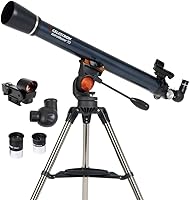
A 70 mm scope on an altazimuth mount is easy to aim and quick to set up. It shows planets, but the views are smaller and less detailed than those from the bigger scopes.
The AstroMaster 70AZ is a smaller option for a buyer who wants a simple scope for the Moon and planets. Expect the planets to look smaller and softer than through the bigger scopes.
What else matters for planets
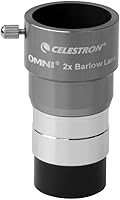
Eyepieces and a Barlow lens matter as much as the scope's size for planet views. Two eyepieces with different powers let you start wide and step up when the air is steady.
A Barlow lens adds power to each eyepiece you own, which helps on a steady night. Our telescope Barlow lens guide explains when a Barlow helps.
Eyepieces
A lower-power eyepiece gives a wide, bright view that makes a planet easy to find. A higher-power eyepiece shows more detail when the air is steady, but it's harder to keep the planet centered.
Pick a scope with at least two eyepieces, so you can choose between the two views on the night.
Finding planets
A bigger scope doesn't help you find a planet. A sky map and a finder do that job, and an app does it for you on a guided scope.
For the step-by-step method, read how to find planets with a telescope. It covers finding and centering a planet in plain steps.
Honest expectations for planet views
Planets look like small discs through a telescope, not the sharp pictures from a space mission. The views are real and rewarding, but they take patience and steady air.
Jupiter's bands and Saturn's rings show best on calm nights. On a hazy or windy night, the planets look softer, and a bigger scope doesn't fix that.
For a full look at what a first telescope can show, read can you see planets with a telescope and what telescope can see Saturn.
How to pick a size you'll actually use
The best size is the one you'll set up on a weeknight, which is often smaller than the one that looks best on paper. A 114 mm or 130 mm scope is a strong middle ground for most adults.
Carry and storage
A bigger tube and mount take more effort to carry outside, and that effort decides how often the scope comes out. If the scope lives in a closet, pick a size you can carry to the yard in one trip.
A tabletop Dobsonian stays on a table, so it doesn't need carrying each time. A tripod scope needs to be lifted, folded and carried, which adds a few minutes to each session.
Setup time at each size
Smaller scopes usually take less time to set up and cool. A 150 mm scope takes longer to cool outside, and that wait matters on a short weeknight.
Setup time also depends on the mount. An altazimuth scope is quick to start, while an equatorial scope needs alignment before the first target.
Matching size to your observing nights
If you usually get an hour on a weeknight, a smaller scope that's ready in minutes gets used more often. If you can plan a weekend session, a bigger scope with a longer setup rewards the time you put in.
Some observers keep one scope for quick looks at the Moon and a second for longer planet sessions. That split works best when the quick-look scope is the one that lives near the back door.
Safety when you're observing planets
Never point a telescope at the sun unless it has a certified solar filter made for that model. Looking at the sun through an unfiltered telescope can cause permanent eye damage, so keep your planet nights to planets and the Moon.
What size telescope do you need for viewing planets?
For most adults, a 114 mm to 150 mm scope is the best size for viewing planets. It shows more detail than a 70 mm or 90 mm scope, and it stays manageable on a table or a tripod.
Choose the size you can set up and use often. A steady mount and a clear night matter as much as the aperture, so pick the scope you'll actually take outside.
For picks by size and mount, read the best telescopes for viewing planets. It compares five scopes side by side.
Frequently asked questions
Is a 70 mm telescope big enough to see planets?
Yes, a 70 mm scope can show Jupiter, Saturn and Venus. The views are smaller and softer than through a 100 mm to 150 mm scope, so Jupiter's bands and Saturn's finer rings are harder to pick out, even on a steady night.
What aperture do I need to see Saturn's rings?
Many small telescopes show Saturn's rings as a clear oval, including scopes from about 70 mm to 114 mm, so a first scope is usually enough. Bigger apertures show more detail on the rings and the planet's bands on a steady night.
Is a bigger telescope always better for planets?
Not always, because a bigger scope needs a steadier mount and a sturdier table. It can also be harder to set up and use on a first night, so the best size is the largest one you can use often.
Do planets need a special telescope?
Planets don't need a special telescope, just a scope with a decent aperture and a steady mount. The aperture matters most for detail, and the mount matters most for keeping the planet in the eyepiece once you've found it on a clear night.