Dobsonian vs Newtonian Telescope Explained: Which Is Better? (October 2026)
A Dobsonian is a mount, and a Newtonian is a mirror design, so the two terms describe different parts of the same telescope. Most Dobsonians hold a Newtonian tube, so the real choice is a table-friendly mount or a tripod-mounted Newtonian.
On this page (12 sections)
- Dobsonian vs Newtonian telescope: the difference
- A Dobsonian is a mount
- A Newtonian is the optics
- Where a Newtonian on a tripod fits
- Where an equatorial mount fits
- Setup, weight and room
- Views and what each design shows
- Collimation and upkeep
- Which one is easier to transport
- Sun safety for both designs
- Common confusions to avoid
- Which telescope should you buy first?
A Dobsonian and a Newtonian are not two rival types of telescope. A Dobsonian describes the mount, and a Newtonian describes the optics inside the tube.
That is why the question confuses many first-time buyers. Most Dobsonians hold a Newtonian tube, so the real choice is how the scope sits and how it moves.
It helps to split the telescope into two parts. The tube gathers light, and the base holds it and lets you aim it.
Dobsonian vs Newtonian telescope: the difference
A Dobsonian is a base, and a Newtonian is a tube. You can put a Newtonian on a Dobsonian base, on a tripod or on an equatorial mount.
The base decides how the scope moves and where it can sit. The tube decides how light reaches your eye.
Most beginner scopes that look like Dobsonians are Newtonians inside. Knowing that makes the shopping choice simpler.
A Dobsonian is a mount
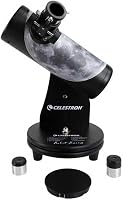
A Dobsonian mount is a simple rocker box with a smooth bearing surface, and the tube sits on top. You move the scope by hand, pushing it up and down and side to side.
There are no gears, no tripod legs and no electronics to set up. The design is named after John Dobson, who built large, low-cost telescopes this way.
The mount is popular because it gives a big aperture for the money. It is also stable on a table or a flat patio, which suits a first scope that stays at home.
A Newtonian is the optics
A Newtonian uses a large concave mirror at the bottom of an open tube. That mirror reflects light up to a small flat mirror near the top, which sends the image out the side of the tube to the eyepiece.
Newtonian optics are simple to make at large sizes, which is one reason they show up so often in beginner scopes. The open tube also needs occasional alignment, so mirror care is part of owning one.
The eyepiece sits on the side near the top of the tube. That position is why a Newtonian looks different from a refractor with the eyepiece at the back.
Dobsonian telescope vs Newtonian optics: how light moves
Light from the sky enters the open top of the tube and falls on the big mirror at the bottom. The big mirror sends it back up to the small mirror, which turns it toward the eyepiece on the side.
On a Dobsonian, the same tube rests on the rocker base, so the light path doesn't change. Only the way you point the tube changes.
Where a Newtonian on a tripod fits
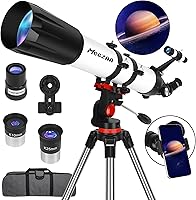
A Newtonian can sit on a tripod instead of a Dobsonian base. The StarSense Explorer LT 114AZ is a 114 mm Newtonian on an altazimuth mount, which moves up and down and side to side, with a slow-motion control for altitude.
This setup suits a buyer who wants a phone app to guide the scope. Celestron says the app recognizes the sky and shows arrows toward targets, which removes much of the hunting on a first night.
A tripod also lets you stand or sit at a different height from a tabletop scope. That can be more comfortable for longer sessions, though the tripod needs floor space and a level spot.
Where an equatorial mount fits
An equatorial mount is a third option. The AstroMaster 130EQ is a 130 mm Newtonian on a German equatorial mount, which is tilted to line up with the sky's rotation, so one knob can follow a target across the sky.
That smooth tracking is useful, but the mount takes practice. Polar alignment is the step most beginners need to learn, and the setup is slower than a Dobsonian base.
Equatorial mounts suit a buyer who wants to learn the sky's motion. They are less of a fit for a first night when you want to see something quickly.
Setup, weight and room
A Dobsonian is the simplest to set up. You set the scope on a table and start looking.
The Heritage 130 weighs about 19 pounds, which is manageable for one adult. A table still needs to be sturdy, since a wobbly surface shakes the view.
A Newtonian on a tripod needs floor space and a steady surface for the legs. The StarSense Explorer LT 114AZ weighs about 10 pounds, which is light, while the AstroMaster 130EQ weighs about 17 pounds with its mount.
If you have a balcony, patio or covered porch, a Dobsonian can sit on a table in a corner. If you want to stand at a tripod and move the scope around the yard, a tripod Newtonian gives you more freedom.
Views and what each design shows
Both designs show the Moon, planets and bright star clusters well when the optics are aligned. A 130 mm Newtonian gathers more light than a 114 mm one, which helps on faint targets.
The difference between the two designs is less about the view and more about handling. A Dobsonian's smooth motion is good for sweeping across the sky, and it sits low, so it stays steady.
A tripod Newtonian lets you change the angle more easily for a high target. With a phone guide, the altazimuth mount is simple to use, even for a beginner.
Collimation and upkeep
Any Newtonian needs its mirrors aligned now and then, which is called collimation. The job takes a few minutes on a clear night, and the manual shows the steps for your model.
Keep dust off the mirror by capping the tube when you're done. A Dobsonian's open tube and a tripod Newtonian's open tube need the same care, so this is not a reason to pick one design over the other.
Dobsonian telescope upkeep
A Dobsonian base needs little care beyond keeping the bearing surfaces clean and the base dry. Check the rocker surfaces after a session, and wipe off any grit before you move the tube.
The mirror still needs the same attention as on any Newtonian. Plan a short alignment check before a big session, and recheck it after any long move.
Which one is easier to transport
A tabletop Dobsonian is one compact unit, so it's simple to carry but bulky to hold. A tripod Newtonian breaks into more pieces, such as the tripod, the mount and the tube, and each piece is easier to hold alone.
For a trip to a park or a friend's yard, the tripod setup can be easier to pack in a bag. For a patio that never moves, the Dobsonian is simpler, since it can stay on its table.
Sun safety for both designs
Never point a Dobsonian, a Newtonian on a tripod or any finder at the sun, even for a moment. Looking at the sun through an unfiltered telescope can cause permanent eye damage.
Common confusions to avoid
A common mistake is to think a Dobsonian is a type of optics that works better than a Newtonian. It isn't, because the mount and the optics solve different problems.
Another is to think a Newtonian always needs a tripod. A Newtonian can sit on a Dobsonian base, a tripod or an equatorial mount, so the tube design doesn't tell you where it will sit.
Last, don't judge a Dobsonian by its size alone. A tabletop scope can have a big mirror and still fit a small table, so measure the table and the scope before you buy.
Which telescope should you buy first?
Pick a Dobsonian telescope if you want a table or patio scope with a big mirror and simple handling. Pick a Newtonian on a tripod if you want a phone-guided start or a scope you can move around the yard.
Pick an equatorial Newtonian only if you want to learn a more technical mount and you're patient with setup. For most first-time buyers, the simpler mount is the better start, since it gets used more.
If you're still deciding, what is a Dobsonian telescope explains the mount in more detail.
For the Heritage 130 and its larger sibling, read the Sky-Watcher Heritage 130 Tabletop Dobsonian Review and the Heritage 130 vs 150 comparison. The Celestron StarSense Explorer LT 114AZ Review covers the phone-guided option.
Frequently asked questions
Is a Dobsonian a Newtonian telescope?
Usually, yes. A Dobsonian is a mount, and most Dobsonians carry a Newtonian reflector tube, which uses a main mirror and a small flat mirror to send light to the eyepiece on the side of the tube.
Can a Newtonian telescope sit on a tripod?
A Newtonian can sit on a tripod. The StarSense Explorer LT 114AZ is one, on an altazimuth mount, and a Dobsonian base is the simpler option for a table.
Which is easier for a first night, a Dobsonian or a tripod Newtonian?
A Dobsonian is easier to set up and aim by hand, since the base moves smoothly and needs no tripod. A tripod Newtonian suits a buyer who wants a phone app or a more portable setup.
Do both need collimation?
Yes, any Newtonian needs its mirrors aligned now and then. That process is called collimation, and the manual for your model shows the steps.